More than escape: How VR weekends helped me reconnect with myself
Have you ever felt too drained to truly relax on the weekend? I used to scroll endlessly, only to feel more tired. Then I tried virtual reality—not for games, but for calm. From forest walks to quiet beaches, VR became my weekend ritual. It didn’t replace real life; it helped me reenter it with more energy and clarity. This is the quiet power I didn’t expect.
The Weekend Burnout No One Talks About
We often think weekends are for rest, but many of us end up more exhausted than when we started. Between chores, errands, and digital noise, true relaxation feels out of reach. I used to lie on the couch, staring at my phone, wondering why I still felt tense. It wasn’t until I stepped into a quiet virtual forest that I realized I wasn’t resting—I was just switching screens. That moment sparked a shift in how I use my weekends.
Like so many women I know—juggling work, kids, household duties, and the endless mental load—I believed I was resting just because I wasn’t actively doing something. But lying on the sofa while scrolling through news, messages, and social media isn’t rest. It’s input overload. My brain wasn’t unwinding; it was processing more information, more emotions, more comparisons. I’d wake up Monday feeling heavier than I did Friday night. That’s not rest. That’s emotional residue.
What changed everything was recognizing that real rest isn’t the absence of movement—it’s the presence of peace. And peace doesn’t always come from silence. Sometimes, it comes from stepping into a space where your mind can breathe. That’s when I gave virtual reality a try, not as a toy or a distraction, but as a tool for emotional recovery. I didn’t expect much. I thought it might be a novelty, something fun to show the kids. But the first time I stood in a virtual forest, listening to birdsong and feeling the breeze through the trees—even though I knew it wasn’t real—my shoulders dropped. My breath slowed. For the first time in weeks, I wasn’t thinking about what I had to do next. I was just… there.
That small moment revealed a truth I hadn’t considered: rest isn’t just physical. It’s mental and emotional. And if we don’t give ourselves space to truly disconnect, we carry that fatigue into our relationships, our work, and our sense of self. VR didn’t fix everything overnight, but it gave me a doorway out of the noise and into a calmer version of myself.
Finding Calm in a World of Noise
Modern life never really stops. Even on Saturday morning, emails, social updates, and household demands creep in. I began using VR not for entertainment, but as a buffer—a 20-minute mental reset before the day began. Whether it was a sunrise over a digital lake or a slow stroll through an alpine trail, these experiences created emotional space. They didn’t distract me from life—they helped me recenter.
Think about your typical Saturday. You wake up with good intentions—maybe a plan to read, take a long bath, or enjoy a slow breakfast. But then the dog needs walking, the kids need help with homework, the laundry pile calls your name, and before you know it, you’re back in the rhythm of doing instead of being. I used to feel guilty for wanting quiet. I’d tell myself, “Everyone else is up and moving—why can’t I just get going too?” But over time, I realized that my need for stillness wasn’t laziness. It was self-preservation.
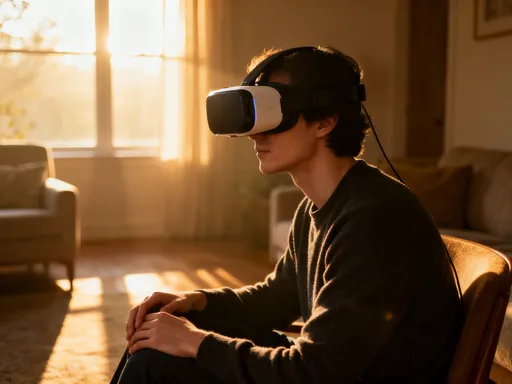
That’s where VR became my ally. Instead of fighting the chaos, I started meeting it with intention. Every Saturday and Sunday, before the house fully woke up, I’d put on my headset and step into a peaceful world. Sometimes it was a quiet Japanese garden with koi fish gliding beneath a wooden bridge. Other times, it was a seaside cliff at dawn, waves crashing below, the sky painted in soft pinks and golds. These weren’t places I’d ever visited in real life, but they felt familiar—like memories of peace I didn’t know I had.
The beauty of it was that I didn’t have to travel, pack a bag, or convince anyone else to slow down. I could create my own sanctuary in 30 seconds. And because it was immersive, my brain didn’t just see the scene—it felt it. The spatial audio made birdsong wrap around me. The gentle movement of trees in the wind tricked my body into relaxing. It wasn’t magic. It was design—technology built to support human well-being. And for me, it became the first act of kindness I gave myself each weekend.
How Virtual Reality Adapts to Your Real Needs
What surprised me most was how VR adjusted to my mood. Some days, I needed stillness—a quiet garden with birdsong. Others, I craved movement, like a virtual bike ride through coastal cliffs. The technology didn’t impose a routine; it responded to how I felt. This adaptability made it feel less like a gadget and more like a thoughtful companion that knew when to speak—and when to be silent.
One Saturday, I woke up feeling restless. My mind was racing with everything I hadn’t finished the week before. I didn’t want to sit. I didn’t want silence. I wanted to move. So instead of my usual forest walk, I chose a VR experience where I could ride a bicycle along a coastal path. The wind rushed past, the ocean sparkled beside me, and with every pedal, I felt my tension release. It wasn’t exercise in the traditional sense, but it gave me the same emotional reset—clarity through motion.
Another Sunday, I was emotionally drained after a difficult conversation with a family member. I didn’t want to talk. I didn’t want to think. I just wanted to feel safe. So I opened a VR meditation space—a glowing, floating island surrounded by clouds. Soft music played. A gentle voice guided me through breathing exercises. I sat cross-legged in my living room, but in my mind, I was floating above the world, untouchable for a few precious minutes.
That’s the power of modern VR—it’s not one-size-fits-all. It’s responsive. You’re not locked into a single experience. You can choose what your nervous system needs in the moment. Need energy? Try a sunrise hike. Need comfort? Step into a cozy cabin with a crackling fireplace. Need focus? Use a VR productivity app that blocks distractions and helps you plan your week. It’s not about escaping reality. It’s about giving yourself the exact kind of restoration you need, right when you need it.
Building a Personal Recharge Ritual
I started treating VR time like self-care, not indulgence. Every Saturday and Sunday morning, I’d put on the headset for just 15 to 30 minutes. No goals, no achievements—just presence. Over time, this became a ritual I looked forward to, like morning coffee or journaling. It wasn’t about escaping reality, but about returning to myself before rejoining the world.
Rituals matter. They anchor us. They signal to our brains that something important is happening. When I started lighting a candle before reading, I read more mindfully. When I began journaling every evening, I processed my day with more clarity. And when I turned VR into a weekend ritual, it stopped being a novelty and became a lifeline.
I chose mornings because that’s when I’m least likely to be interrupted. The house is quiet. The coffee is warm. The world hasn’t fully started yet. I sit on the edge of the couch, put on the headset, and let the outside world fade. I don’t check my phone afterward. I don’t jump into chores. I let the calm linger. Sometimes I just sit and breathe. Other times, I write down a thought or intention for the day. This small pause—this deliberate act of stillness—has reshaped how I move through my weekends.
And here’s the thing: it didn’t require a big time commitment. Fifteen minutes is less than one episode of a TV show. But those 15 minutes are mine—untouched by demands, expectations, or distractions. They belong to me. And in a life where so much of my time is given away—work, family, home—having even a few minutes that are truly mine has made a bigger difference than I ever expected.
Unexpected Benefits Beyond Relaxation
The effects spilled into my real days. I noticed I was more patient with family, more focused at work, and less reactive to stress. One evening, my partner remarked, “You’ve seemed lighter lately.” I realized VR wasn’t just giving me calm—it was improving my emotional resilience. The virtual moments of peace were quietly shaping my real-life presence.
I didn’t expect VR to change how I showed up in the world. I thought it was just a way to relax for a few minutes. But what I didn’t realize was how much my constant low-level stress was affecting everything—my tone of voice, my ability to listen, even how I made decisions. When I was always in “doing” mode, I wasn’t fully present in “being” mode.
After a few weeks of consistent VR use, I started noticing subtle shifts. I didn’t snap as quickly when the kids left toys everywhere. I paused before responding to a stressful email. I found myself smiling more—at small things, like sunlight on the kitchen floor or the sound of rain on the roof. These weren’t dramatic changes. They were quiet upgrades to my emotional operating system.
One Saturday, my daughter came into the living room while I was finishing a VR session. She saw me take off the headset and asked, “Mom, were you playing a game?” I smiled and said, “No, sweetie. I was visiting a quiet place.” She thought for a moment and said, “Can I go there too someday?” That moment hit me. I wasn’t just caring for myself—I was modeling self-care for her. I was showing her that it’s okay to need quiet, to want peace, to take time for yourself without guilt.
That’s when I realized VR wasn’t just a personal tool. It was a lesson in emotional health—one I was passing on simply by living it.
Making It Work in Everyday Life
You don’t need expensive gear or hours of free time. I use a simple standalone headset, store calming experiences in a favorites folder, and pick times when the house is quiet—early mornings or after dinner. The key isn’t duration or tech specs, but consistency. Like a daily walk or meditation, it’s the small, repeated acts that build lasting change.
I’ll be honest—I used to think VR was for gamers or tech enthusiasts. I assumed it would be complicated, expensive, or isolating. But the truth is, the technology has evolved. Today’s standalone headsets don’t require a computer or console. You charge them like a phone, turn them on, and step in. Many come with guided meditations, nature walks, and relaxation experiences built right in. Some even sync with your breath or heart rate to deepen the calming effect.
I started with a basic model—nothing fancy. I downloaded a few free apps focused on mindfulness and nature. I created a favorites list so I wouldn’t waste time searching. And I committed to just 10 minutes a day. That’s it. No pressure. No performance. Just showing up.
What helped most was treating it like any other healthy habit. I didn’t wait for the “perfect moment.” I didn’t need a special room. I used the same corner of my living room every time. I even kept a soft blanket nearby so I could get comfortable. Over time, that corner became my reset zone—a physical space tied to mental peace.
If you’re thinking about trying this, start small. Pick one experience. Try it once a week. See how it feels. You don’t have to love every app or scene. It’s about finding what works for you. Maybe it’s a mountain lake. Maybe it’s a library with soft lighting and classical music. Maybe it’s a virtual art studio where you can paint without cleanup. The goal isn’t to escape—it’s to recharge.
Why This Matters for Modern Living
In a world that glorifies busyness, true rest feels radical. VR offered me a way to reclaim stillness without leaving home. It didn’t disconnect me from life—it helped me engage more deeply. For anyone feeling mentally stretched, emotionally worn, or just stuck in a routine, this might be the gentle reset you didn’t know you needed.
We live in a culture that equates productivity with worth. We’re praised for doing more, pushing harder, staying connected. But no one celebrates the woman who sits quietly with her thoughts. No one gives awards for taking a real break. And yet, those quiet moments are where healing happens. That’s where we remember who we are beneath the roles we play.
VR didn’t give me more time. But it gave me better time—time that felt nourishing instead of draining. It reminded me that rest isn’t selfish. It’s necessary. And when we refill our own cups, we show up as better mothers, partners, workers, and friends.
I still use VR every weekend. Sometimes more. It’s not a fix for every challenge, but it’s a reliable friend when I need to reset. It’s taught me that technology doesn’t have to add to the noise. It can help us find peace within it. And for that, I’m deeply grateful.
If you’ve ever felt too tired to rest, too busy to breathe, or too stretched to be present—know this: you’re not alone. And you don’t have to choose between caring for others and caring for yourself. Sometimes, the most powerful thing you can do is step into a quiet forest, even if it’s not real. Because in that moment, your peace is.