I Cut My Charging Waste by 70%: How Smart Plugs Transformed My Weekend Hangouts
You know that cozy feeling when friends finally gather at your place after weeks of busy schedules? Laughter, snacks, chargers plugged in everywhere—and then, hours later, you realize half the devices are still sucking power. I used to ignore it, until I saw my electricity bill spike. That’s when I discovered smart charging management. It didn’t just save me money—it quietly reshaped how we connect, relax, and recharge together. What started as a small fix turned into a meaningful shift in how I host, how we spend time, and even how I think about energy in my home. This isn’t about living like a tech expert. It’s about using simple tools to make everyday life just a little bit better.
The Weekend Ritual That Was Costing Me More Than I Knew
Let’s be honest—weekend hangouts are sacred. After days of school runs, work emails, and laundry piles, gathering with friends feels like a reset. We kick off our shoes, pour drinks, share stories, and just breathe. But over time, I started noticing something else: the invisible cost of all that connection. It wasn’t the wine or the snacks. It was the quiet energy drain happening right under our feet.
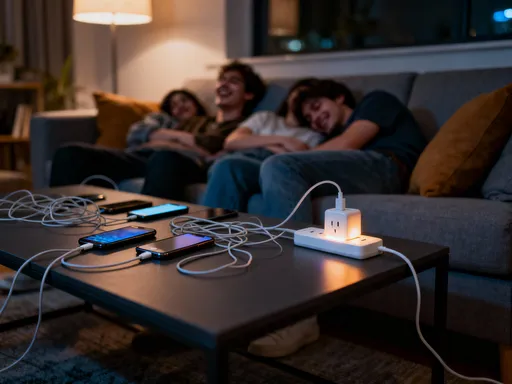
Phones, tablets, even smartwatches—everyone brings at least one device. And once they’re plugged in, they stay there. Long after they’re charged. I remember one Sunday morning walking into the living room and seeing five chargers still glowing, cords tangled like spaghetti. My son’s tablet had been at 100% since midnight. My friend’s phone had been fully charged for hours. Yet here we were, still pulling power from the wall for no reason.
I started wondering: how much is this really costing me? So I did a little research. A single phone charger left plugged in uses about 0.26 watts when not charging. That sounds tiny—until you multiply it by five devices, eight hours, and every weekend. Over a month, that adds up to more than 40 kilowatt-hours of wasted energy. And yes, that shows up on your bill.
But it wasn’t just the money. It was the habit. We were all guilty of it—plugging in and forgetting. No one meant to waste energy. We just didn’t have a system. And that lack of awareness was costing us more than I realized. It made me think: if we can be this careless with something so small, what else are we overlooking in our homes?
A Simple Swap That Changed Everything: Meet the Smart Plug
I didn’t want to become a full-time energy monitor. I didn’t want to nag my guests or make them feel bad for using a charger. I just wanted a smarter way to handle it. That’s when I met the smart plug. I know it sounds like one of those gadgets that’s more hassle than help, but this one was different.
A friend mentioned she uses one for her coffee maker. “It turns on at 7 a.m. every day,” she said. “And I never have to touch it.” That got me thinking. If it can work for coffee, why not for charging? So I bought one—just one, to test it out. I plugged my living room power strip into it and connected it to an app on my phone. Within minutes, I could turn the power on and off from my couch.
The first time I used it, I was amazed. It was 11:30 p.m. The movie had ended, people were heading out, and I was about to do my usual round of unplugging. But then I remembered: I didn’t have to. I opened the app, tapped “off,” and just like that—every charger stopped drawing power. No walking around. No tripping over cords. Just peace of mind.
I didn’t stop at one. Within a week, I had smart plugs on every outlet in the living room. I even added one near the guest bedroom. Now, I can control everything from my phone, my tablet, or even with voice commands. “Hey, turn off the living room plugs,” and it’s done. The best part? My guests didn’t even notice the change. The hangouts stayed the same. The laughter, the snacks, the deep talks—they’re all still there. But now, I’m not paying for energy we don’t need.
How Technology Quietly Shapes Better Habits
Here’s the thing I didn’t expect: the smart plug didn’t just turn off power. It changed how we think. At first, I set it to shut off at midnight. But then I started using timers and schedules. I set it to run from 6 p.m. to 11 p.m. on weekends—plenty of time to charge, but not all night. I even added a reminder in the app: “Charging ends in 30 minutes.”
Suddenly, people started paying attention. One night, a friend looked at her phone and said, “Hey, your charger’s about to turn off, isn’t it?” I smiled and said, “Yes! Want to grab one more top-up?” She laughed and plugged in for the last half hour. That moment stuck with me. We weren’t being forced to change. We were being gently reminded.
Over time, my family started doing the same. My daughter now unplugs her tablet when it’s done. My husband turns off the guest room charger before bed. We’re not perfect, but we’re more aware. And that’s what matters. The smart plug didn’t take control—it gave us control. It’s like having a quiet helper that whispers, “Hey, you’ve got this,” instead of shouting orders.
What I love most is that it works in the background. I don’t have to think about it. I set it once, and it runs on its own. No daily effort. No guilt. Just consistency. And that’s how real habits form—not through big changes, but through small, repeatable actions that make life easier.
Saving Money, One Gathering at a Time
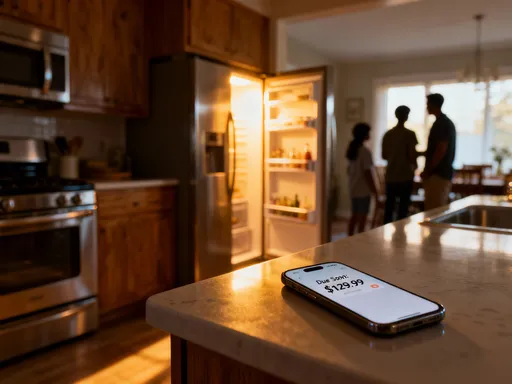
Two months after installing the smart plugs, I opened my electricity bill and did a double take. It was $23 lower than the same month last year. I checked the usage chart. My weekend energy spike was gone. No more late-night draw from forgotten chargers. No more phantom load from idle devices. Just clean, intentional power use.
I did the math. Before, we were wasting about $15 to $18 a month on unnecessary charging. That’s not a fortune, but it’s not nothing. That’s a family movie night. A nice cheese board. A bottle of sparkling cider for the girls’ brunch. Now, I take that money and put it toward things that bring us joy.
Last weekend, I used the savings to upgrade our snacks—organic popcorn, dark chocolate, fancy nuts. My friends noticed. “This feels fancier than usual,” one said. I smiled and said, “Turns out, unplugging pays off.” We all laughed, but it was true. The money we saved didn’t come from cutting back. It came from being smarter.
And here’s the thing: it’s not just about charging. Once I saw how much I could save with one small change, I started looking at other areas. The TV standby mode. The kitchen appliances left on. The guest room heater running all week. The smart plug opened my eyes to how much we waste without even knowing it. Now, I’m not just saving on weekends. I’m saving every day.
More Than Savings: A Calmer, Cleaner Space
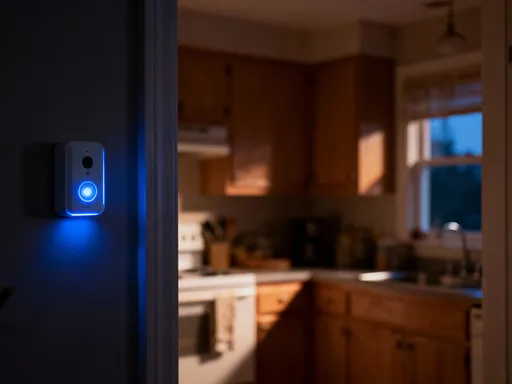
There’s something about a tidy space that just feels better. Before the smart plugs, my living room at night looked like a charging station. Lights blinking. Cords everywhere. A faint hum from the power strip. It wasn’t loud, but it was there—like background noise you don’t notice until it’s gone.
Now, when the plug turns off at midnight, the room goes quiet. The lights go dark. The air feels still. It’s not just cleaner—it’s calmer. I’ve had guests say, “Your house feels so peaceful at night.” One friend even said, “I slept better after staying over.” I didn’t expect a plug to affect sleep, but it makes sense. Less visual clutter. Less electronic noise. More space for rest.
It’s funny how such a small thing can shift the mood of a room. We spend so much time curating our decor, our lighting, our music—but we forget about the invisible things. The energy flow. The digital clutter. The constant pull of devices. By setting boundaries around charging, I’ve created a space that feels more intentional. More like a home, and less like a tech hub.
And that matters. Because when the space supports connection, we connect more deeply. We talk more. We listen better. We’re present. We’re not distracted by glowing screens or the nagging thought that we’re wasting energy. We’re just together. And that’s what weekends are for.
Sharing the Habit: How My Friends Started Their Own Changes
One night, as I turned off the plugs from my phone, a friend asked, “Wait, how did you do that?” I showed her the app. She was amazed. “You can just turn off everything with your phone? That’s genius.” I lent her my tablet, let her play with the settings. By Monday, she had ordered two smart plugs for her living room.
Then another friend saw mine during a playdate. “I need this,” she said. “My kids leave their tablets plugged in all night.” She got one for her family room. Now, we text each other about our settings. “I set mine to turn off at 10:30,” one said. “I use voice control,” another replied. It’s become a little inside joke—but also a real support system.
What I love is that it’s not about showing off. It’s about caring. Caring about our homes. Our bills. Our planet. We’re not activists. We’re just moms, friends, busy women trying to make life a little easier. And when we share what works, it spreads. One plug leads to another. One change leads to a habit. And before you know it, you’ve created a ripple.
I didn’t set out to change anyone. I just wanted to fix one small problem. But by sharing my experience, I helped others do the same. And that feels good. Because real change doesn’t come from big campaigns. It comes from real people, real conversations, real solutions that fit into real life.
Why Small Tech Choices Add Up to a Better Life
Looking back, I see how one small decision reshaped my weekends. It wasn’t about gadgets. It wasn’t about being high-tech. It was about intention. I wanted to protect the moments I love—the laughter, the connection, the ease of being together. And this tiny tool helped me do that.
Smart charging didn’t replace our rituals. It protected them. It gave me back time, money, and peace of mind. It helped me create a space where we can relax without guilt. Where fun doesn’t have to cost extra. Where technology serves us, not the other way around.
And now, every time the plug turns off at midnight, I smile. It’s not just a signal that the chargers are off. It’s a reminder that I’m in control. That I’m making choices that matter. That I’m building a home that supports how I want to live.
Because that’s what technology should do. Not complicate things. Not overwhelm us. But quietly, gently, help us live better. One small step at a time. One weekend at a time. One plug at a time. And if that little change can bring more calm, more savings, and more joy to my home, I say—why not start today?