How I Rebuilt My Energy with Qigong—A Real Healing Journey
For years, I felt drained—no matter how much I rested. After a health scare, I turned to traditional Chinese medicine and discovered qigong. Not the trendy kind, but a slow, systematic practice that changed everything. This isn’t a quick fix; it’s a rehabilitation plan rooted in balance, breath, and daily commitment. I’ll share how this ancient practice helped me regain strength, focus, and calm—naturally. What began as a last resort became a daily anchor, restoring not just energy but a sense of self I thought I’d lost. This is not a miracle story. It’s a real journey of gradual healing, guided by wisdom older than modern medicine itself.
The Breaking Point: When Modern Medicine Wasn’t Enough
It started subtly—fatigue that coffee couldn’t touch, brain fog that made simple tasks feel overwhelming. I visited doctors, ran blood tests, adjusted my diet, and even tried prescription medications. The results were always the same: no clear diagnosis, no real relief. I was labeled with chronic fatigue syndrome, a term that felt more like a dead end than a starting point. Despite following every medical recommendation, my energy levels continued to decline. I could barely get through a workday without crashing by mid-afternoon. Even weekends, meant for rest, left me feeling more exhausted than before.
It wasn’t until a routine visit with a holistic physician that I heard the words: “Your body isn’t broken—it’s out of balance.” She explained that Western medicine often treats symptoms in isolation, but doesn’t always address the underlying patterns of energy, stress, and lifestyle that contribute to long-term fatigue. She suggested I explore traditional Chinese medicine (TCM) as a complementary approach. Skeptical but desperate, I agreed. That conversation led me to my first qigong class—not in a luxury wellness center, but in a small community clinic taught by a retired TCM practitioner.
At first, I didn’t expect much. The movements looked slow, almost too simple. But within a few sessions, something shifted. I noticed I was sleeping more deeply. My mind felt clearer in the mornings. I wasn’t cured, but for the first time in years, I felt a flicker of hope. This wasn’t about fighting my body anymore. It was about listening to it. That subtle change—feeling heard by my own physiology—was the beginning of a deeper healing journey.
Understanding Qigong: More Than Just Breathing Exercises
Qigong (pronounced “chee-gong”) is a centuries-old practice rooted in traditional Chinese medicine, combining gentle movement, mindful breathing, and focused intention to cultivate and balance qi—the vital energy that flows through the body. Unlike aerobic exercise or strength training, qigong doesn’t rely on intensity. Instead, it emphasizes awareness, alignment, and the quality of movement. It’s often misunderstood as mere stretching or meditation, but it is a complete system designed to support physical, emotional, and energetic health.
In TCM, health is seen as a state of free-flowing qi. When energy becomes blocked or depleted—due to stress, poor sleep, emotional strain, or illness—symptoms like fatigue, pain, and mental fog arise. Qigong works by gently unblocking these pathways, known as meridians, and replenishing the body’s energy reserves. This isn’t mystical thinking; it aligns with modern understandings of the nervous system. Slow, rhythmic breathing activates the parasympathetic nervous system, reducing stress hormones and promoting recovery. Coordinated movement improves circulation and joint mobility, while mental focus enhances neuroplasticity and emotional regulation.
It’s important to distinguish between general wellness qigong and medical qigong. The former is often taught in gyms or online platforms as a form of light exercise. Medical qigong, however, is a structured therapeutic practice used to support specific health conditions under the guidance of trained practitioners. My recovery relied on the latter—a tailored, progressive approach that addressed my fatigue at the energetic level, not just the physical.
Why a Systematic Approach Makes the Difference
Early on, I made the mistake of treating qigong like a quick workout. I’d watch random YouTube videos, try a few moves, and expect results. Nothing changed. In fact, I sometimes felt more frustrated. The problem wasn’t the practice—it was the lack of structure. Without a clear framework, qigong can feel aimless. Like taking vitamins without knowing the dosage, or walking without a destination, it lacks the consistency and progression needed for real transformation.
What finally worked was a phased rehabilitation model, similar to physical therapy but for energy restoration. This approach included daily practice, specific sequences tailored to my condition, and regular check-ins with my instructor. Each phase built on the last, ensuring that my body had time to adapt and integrate the benefits. The key wasn’t intensity—it was regularity. Just 15 minutes a day, done with intention, proved more effective than an hour done sporadically.
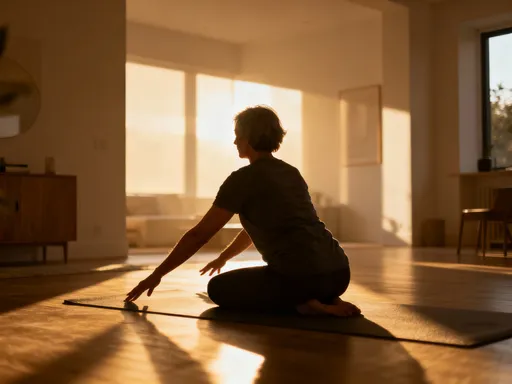
Timing and environment also mattered. I learned to practice in the morning, when my energy was most receptive, and in a quiet space free from distractions. The intention behind each session—whether it was to calm the mind, strengthen the kidneys (in TCM, the kidneys are linked to vitality), or release tension—shaped the outcome. This level of mindfulness turned qigong from a routine into a ritual, one that honored my body’s needs rather than pushing it to perform.
Phase One: Rebuilding Foundation with Gentle Movement and Breath
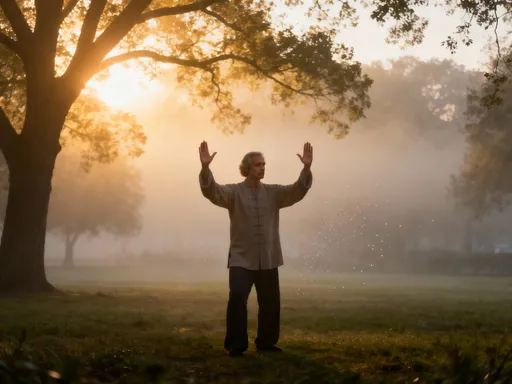
The first two weeks were the hardest, not because the movements were difficult, but because they required me to slow down in a world that values speed. My instructor started me with standing meditation and diaphragmatic breathing—simple practices that felt almost too basic. I stood with feet shoulder-width apart, knees slightly bent, arms relaxed at my sides. The goal was to feel grounded, to notice the weight of my body, and to breathe deeply into the lower abdomen.
At first, I struggled. My mind raced. My shoulders stayed tense. But over time, I began to notice subtle shifts. My breath became slower and fuller. My posture improved without effort. Most importantly, I started to recognize the early signs of fatigue—tightness in the chest, shallow breathing, mental restlessness—before they escalated. This awareness was revolutionary. Instead of waiting until I was completely drained, I could intervene early with a few minutes of mindful breathing.
By the end of the first phase, the changes were measurable. I was falling asleep faster and waking up feeling more refreshed. My anxiety levels dropped, as tracked by a simple journal I kept each night. I didn’t have bursts of energy yet, but the constant low-grade exhaustion began to lift. My instructor reminded me: “Healing starts with stillness.” I was learning to rest without guilt, to be present without pressure. This foundation of calm became the bedrock for everything that followed.
Phase Two: Activating Energy Flow and Body Awareness
Weeks three to six introduced flowing movements designed to stimulate qi circulation. The first sequence I learned was “Lifting the Heaven”—a slow, rising motion where the hands lift from the lower abdomen to above the head, then lower back down. Each movement was synchronized with the breath: inhale as the hands rise, exhale as they fall. The second was “Separating Heaven and Earth,” where one hand rises while the other sinks, creating a gentle stretch through the torso.
These movements weren’t just physical. They were symbolic, teaching me to connect with the natural rhythms of expansion and contraction, effort and release. As I practiced, I noticed improved circulation—my hands and feet felt warmer. My focus sharpened, especially during the afternoon slump. I no longer needed to rely on caffeine to push through. The rhythmic nature of the movements had a meditative effect, quieting mental chatter and enhancing mental clarity.
Of course, there were setbacks. Some days, I felt too tired to complete the full routine. Instead of skipping practice, I learned to adapt. On low-energy days, I shortened the session or focused only on breathing. My instructor emphasized that consistency didn’t mean perfection—it meant showing up, even in a small way. This flexibility prevented burnout and reinforced the idea that healing isn’t linear. Over time, I developed a deeper body awareness, recognizing how my energy fluctuated day to day and adjusting my practice accordingly.
Phase Three: Deepening Practice for Emotional and Physical Resilience
By weeks seven to twelve, my practice evolved to include meditative visualization and self-massage, known as qigong tuina. We began working with the concept of emotional energy—how unresolved stress, grief, or frustration can become stored in the body, contributing to fatigue and tension. One exercise involved visualizing warmth and light moving through areas of tightness, sending gentle attention to where energy felt stuck.
The emotional releases surprised me. During one session, while focusing on the solar plexus, I began to cry—softly at first, then in waves. I hadn’t realized how much unprocessed stress I was carrying. In TCM, emotions are linked to specific organs: anger with the liver, worry with the spleen, grief with the lungs. By bringing awareness to these areas, I was able to release stored tension in a safe, supported way. This wasn’t therapy in the traditional sense, but it complemented my emotional healing in profound ways.
I also incorporated self-massage techniques, using gentle circular motions on acupressure points like the Zu San Li (ST36), known for boosting vitality. These small practices took only a few minutes but deepened my connection to my body. By the end of this phase, I had built a personalized routine that fit my real life—short enough to do daily, adaptable enough to honor my energy levels, and rich enough to sustain long-term growth.
Integrating Qigong into Daily Life: Beyond the Routine
One of the most powerful lessons was that qigong doesn’t have to be confined to a formal session. Micro-practices—short, intentional moments of breath and awareness—can maintain energy flow throughout the day. While waiting for the kettle to boil, I’d stand in a relaxed posture and take three deep breaths. During a work break, I’d do a gentle neck roll or shoulder release. These tiny pauses, once integrated, became lifelines.
I also began combining qigong with other daily activities. A morning walk wasn’t just exercise—it became a moving meditation, where I synchronized my steps with my breath. Stretching before bed included qigong-inspired movements to calm the nervous system. Even washing dishes became an opportunity to practice presence, feeling the warmth of the water and the rhythm of my movements.
This integration marked a shift from recovery to sustainable wellness. Qigong was no longer something I did to fix myself—it became a way of being. It taught me that health isn’t a destination, but a continuous practice of listening, adjusting, and honoring my body’s needs.
Conclusion: A Practice That Heals, Not Just Fixes
Looking back, my journey with qigong wasn’t about finding a cure. It was about rebuilding a relationship with my body—one based on trust, patience, and compassion. The fatigue didn’t vanish overnight, but over months of consistent practice, my energy returned, not as a burst, but as a steady current. I regained focus, emotional balance, and a sense of calm that no medication had provided.
The most valuable lessons weren’t just physical. They were about the power of small, daily commitments. About learning to slow down in a fast-paced world. About understanding that healing isn’t always loud or dramatic—it’s often quiet, gradual, and deeply personal. I didn’t do this alone. Professional guidance, whether from a TCM practitioner or a certified qigong instructor, was essential. This isn’t a practice to rush into without support.
If you’re feeling drained, overwhelmed, or disconnected from your body, know that there is another way. It may not be fast, but it can be lasting. Start with five minutes of deep breathing. Notice how your body responds. Be patient. Be kind to yourself. Trust that even the smallest step, taken consistently, can lead to profound change. Qigong didn’t just rebuild my energy—it gave me back my life, one breath at a time.